The visible half of an outdoor kitchen is an island, a counter and a grill. The half that decides whether it is safe and legal is a gas line sized to the appliances, an electrical plan on dedicated circuits, a permit record and an inspection. Here is what the published guidance says needs a permit in Atlanta, and the two line items that quietly go missing from quotes.
What Actually Needs a Permit
The published answer is broad: most outdoor kitchen builds with gas, electrical, or plumbing work require a permit, and a covered structure such as a pergola or pavilion often needs one as well. Gas line work, new electrical circuits and any covered structure usually need permits, and HOA approval is separate.
Two small requirements get overlooked. GFCI electrical outlets are code required, with at least one at counter level, and stair riser lights are code required for steps with 3+ risers. Anything over 12 ft tall usually requires a permit, and the published inspection set is a gas pressure test, an electrical rough-in and a final inspection on covered structures.
The Permit Allowance and the Bands a Quote Forgets
The published cost model carries a permit allowance of $75 – $400: a small line that disappears when a total is presented as one number. Ask who pulls the gas, electrical, and plumbing permits and who does the utility connections, so the line sits either inside the quote or clearly beside it.
Two bands belong in every budget. Running gas, water and electric lines is published at 2,000 to 5,000. Separately, underground line runs and trenching add 500 to 2,000 that many quotes leave out. A gas line run from the meter is published at 400 – 2,000, and a low-voltage lighting package at 500 – 1,500.
The published defence is a document: get a written utility plan covering gas line sizing, electrical circuit capacity, and water shutoff locations before signing.
The Licensed-Trade Rule Is Not Optional
The published warning is unambiguous: gas lines, electrical circuits, and water lines must be permitted and inspected for safety, and a handyman shortcut can void appliance warranties and create fire or shock hazards — a connection made outside the licensed route can end the appliance warranty before the appliance is even lit.
A gas problem is where speed matters more than money. A gas smell, weak flame, or hissing at a fitting means the line needs attention immediately, and the published fix framing is that the line is pressure-tested and confirmed safe before anyone cooks on it.
Three checklist gates cover the trade side: a licensed plumber and electrician handle the utility connections, gas lines are pressure-tested before the grill is connected, and circuits are grounded and GFCI-protected. Add current general liability and workers comp insurance on file.
Sizing Gas, Power and Ventilation
The published sizing rule is to size the gas line to the total BTU of every appliance, not just the grill, and to put the lighting, fridge and any heater on dedicated circuits. A kitchen with a side burner, a pizza oven and an outdoor fireplace is several gas loads on one line, sized together from the start.
Ventilation follows the same logic: open-air builds need no mechanical ventilation, but covered or enclosed areas require a rated vent hood, because an under-counter grill or an enclosed room without airflow traps smoke and heat. Beverage equipment adds a note — CO2 needs a dedicated, ventilated home, and draft systems require a compressor with enough air around it to shed heat. The published test is a routing drawing: a quote listing a kegerator and ice bin without one has not priced them yet. A kegerator or beverage centre is published at 700 – 2,500.
Water, Drainage and the HOA Clock
A sink outdoors is a plumbing job, not a hose. The published description is hot and cold running water with an outdoor-rated faucet, which requires a dedicated water line and proper drainage. A sink with plumbing is published at 300 – 2,000, and a sink with running water at 1,500 to 3,500. Confirm water lines have shutoffs and are winterized where needed, and where a kitchen has a sink or an ice maker the slab should include a floor drain, because poor drainage leads to standing water, moss, and rusted appliance bases.
HOA approval runs on its own clock, separate from the permit. Published restrictions on covers and pergolas include height caps, often 10-12 ft, and setbacks from property lines and greenbelts, and the published schedule is HOA approval and permits 10-25 days, then utility rough-in 2-3 days.
Before You Sign, and What to Check After
Four published post-install checks belong in the walkthrough: the gas pressure test passed and every appliance lighting cleanly; no gas smell at any joint and shut-off valves accessible; the fridge and lighting on their own protected circuits; and drainage and slope carrying water away from the footings.
Atlanta Outdoor Kitchens is an independent matching service, not a contractor. We do not run gas lines, pull permits or inspect work, and we do not employ contractors. We match homeowners in Atlanta and across metro Atlanta with local providers — up to 3 matches, within one business day, 100% free — and the published quote questions belong to each of them.
Frequently asked questions
Does an outdoor kitchen always need a permit?
Most builds with gas, electrical, or plumbing work require a permit, and a covered structure such as a pergola or pavilion often needs one as well. Gas line work, new electrical circuits and any covered structure usually need permits, and HOA approval is separate.
What do quotes most often leave out?
Underground line runs and trenching add 500 to 2,000 that many quotes leave out. A low-voltage lighting package is published at 500 – 1,500.
What should be checked at the end of the build?
A passed gas pressure test with every appliance lighting cleanly, no gas smell at any joint and accessible shut-off valves, the fridge and lighting on their own protected circuits, and drainage and slope carrying water away from the footings.
Sources
- National Weather Service — local climate pages and station records
- USDA-NRCS Web Soil Survey (drainage and depth to water table for the parcel)
- USDA-NRCS Official Soil Series Descriptions
Related
Outdoor Kitchens services in Atlanta
Atlanta Outdoor Kitchen Construction
A built-in outdoor kitchen is a permanent structure before it is a cooking appliance, and the published numbers only make sense once you know which of the two you are paying for.
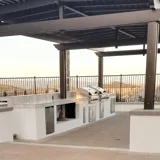
Atlanta Outdoor Kitchen Pergola And Patio Cover
A shade structure is the part of an outdoor kitchen that decides how many months of the year the rest of it actually gets used.
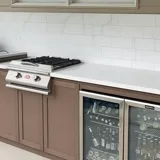
Atlanta Outdoor Kitchen Fireplace
An outdoor fireplace is built around one 1,800-degree event, and every part of the specification exists because of it.
Atlanta Outdoor Kitchen Bar Construction
An outdoor bar is two jobs in one structure: a counter run built to bar height, and a small commercial beverage system with water, power and a drain.
Atlanta Outdoor Kitchen Lighting
Outdoor lighting is specified in layers, not in fixtures, and any one layer on its own fails at exactly the job it was bought for.
Atlanta Outdoor Kitchen Pizza Oven
A pizza oven is a masonry appliance: the heat is the easy part, and the footprint, the mass and the clearance to combustibles are what the build is really about.
Areas we serve
Atlanta
Outdoor Kitchens in Atlanta, GA - costs, water and soil notes.
Sandy Springs
Outdoor Kitchens in Sandy Springs, GA - costs, water and soil notes.
Alpharetta
Outdoor Kitchens in Alpharetta, GA - costs, water and soil notes.
Marietta
Outdoor Kitchens in Marietta, GA - costs, water and soil notes.
Decatur
Outdoor Kitchens in Decatur, GA - costs, water and soil notes.
Brookhaven
Outdoor Kitchens in Brookhaven, GA - costs, water and soil notes.
Smyrna
Outdoor Kitchens in Smyrna, GA - costs, water and soil notes.